
Published: April 24th, 2025
Reading Time: 7 Min
Written by: Keith Corbett, CFP®
Equity compensation is a type of non-cash benefit that some employers offer employees as part of their total compensation package. Instead of receiving only a salary and bonuses, employees are granted potential ownership in the company through stock options, restricted stock units (RSUs), or other equity-based incentives. This form of compensation can be highly valuable, but it also comes with complexities related to taxation, financial planning, and company growth potential.
At its core, equity compensation aligns employees’ financial success with the success of their company. Employers may offer equity through:
Stock Options: The right to purchase company stock at a predetermined price (often lower than market value). This includes Incentive Stock Options (ISOs) and Non-Qualified Stock Options (NQSOs), which can have different tax treatments.
Restricted Stock Units (RSUs): Shares awarded to employees that vest over time, meaning the employee must stay with the company for a set period before gaining full ownership.
Employee Stock Purchase Plans (ESPPs): Programs that allow employees to buy company stock at a discount, with potential for favorable tax treatment.
Transitioning from a career to retirement requires careful financial planning. An advisor can help with:
Stock options: When exercised, NQSOs are taxed as ordinary income, while ISOs may qualify for lower capital gains tax rates if held long enough. (Exercising ISOs can also trigger AMT tax!).
RSUs: Taxed as ordinary income when they vest, meaning employees must plan ahead to cover potential tax liabilities.
ESPPs: Tax treatment depends on how long the stock is held after purchase, with potential advantages for long-term holders.
One of the biggest factors in managing equity compensation is whether the company is private (pre-IPO) or public (post-IPO). Each stage presents unique opportunities and risks that require careful planning.
Pre-IPO Companies: Employees may hold stock that isn’t liquid, meaning they can’t sell it immediately. Planning for a future liquidity event (such as an IPO or company sale) is critical to ensuring they’re prepared for both the financial windfall and the tax implications that come with it.
Post-IPO Companies: Once a company is publicly traded, employees can sell their shares, but they must navigate stock price volatility, tax consequences, and diversification strategies to avoid over-concentration in a single stock.
Understanding how to manage equity at each stage can significantly impact long-term financial outcomes.
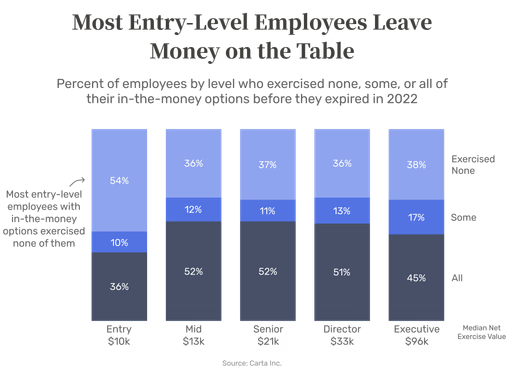
Equity compensation can be a valuable wealth-building tool, but without careful planning, employees may face unexpected tax bills or missed financial opportunities. In fact, a 2022 study by Carta (see image above) found that over 50% of entry-level employees didn’t exercise their in-the-money stock options before they expired — essentially walking away from compensation they had earned. The median value of those unexercised options was $10,000 at the entry-level and $96,000 at the executive level. Put simply, it’s like turning down a bonus from your employer without even realizing it.
To avoid a major financial blunder and make the most of their equity, employees should:
Understand their grants: Know the vesting schedule, tax implications, and expiration dates.
Plan for taxes: Work with a financial professional to strategize when and how to exercise or sell stock.
Align equity with financial goals: Consider how stock compensation fits into long-term objectives like home purchases, college savings, or retirement.
By taking a proactive approach, employees can maximize the benefits of their equity compensation while avoiding costly mistakes. Working with an advisor who specializes in equity compensation can help ensure they make informed, strategic financial decisions.